
 colokeba
An anonymous insider has raised serious concerns about the way KessBet conducts its business, highlighting troubling practices affecting both staff and customers.
According to the whistleblower, shared with blogger Cyprian Nyakundi, the company’s operations appear to lack fairness and respect, creating an environment of fear for employees and confusion for users.
KessBet, which opened in mid-2024 under a Kenyan-registered firm called Kessun Kenya Limited, is licensed by the Betting Control and Licensing Board.
It offers sports betting, casino games, virtual sports, and live betting. The platform appears modern and convenient, accepting M-Pesa payments and offering markets that include local and international football matches.
Despite this, concerns about its practices have already surfaced on social media and among insiders.
The whistleblower claims that the company tends to hire mainly young Kenyan women for customer service roles.
These employees reportedly face sudden dismissals without warning or explanation, forcing them to work in a constant state of uncertainty.
For those trying to build their careers or support their families, such conditions can be demoralizing and stressful.
Kenyan labour laws require fair procedures for termination, including notice periods and the right to be heard.
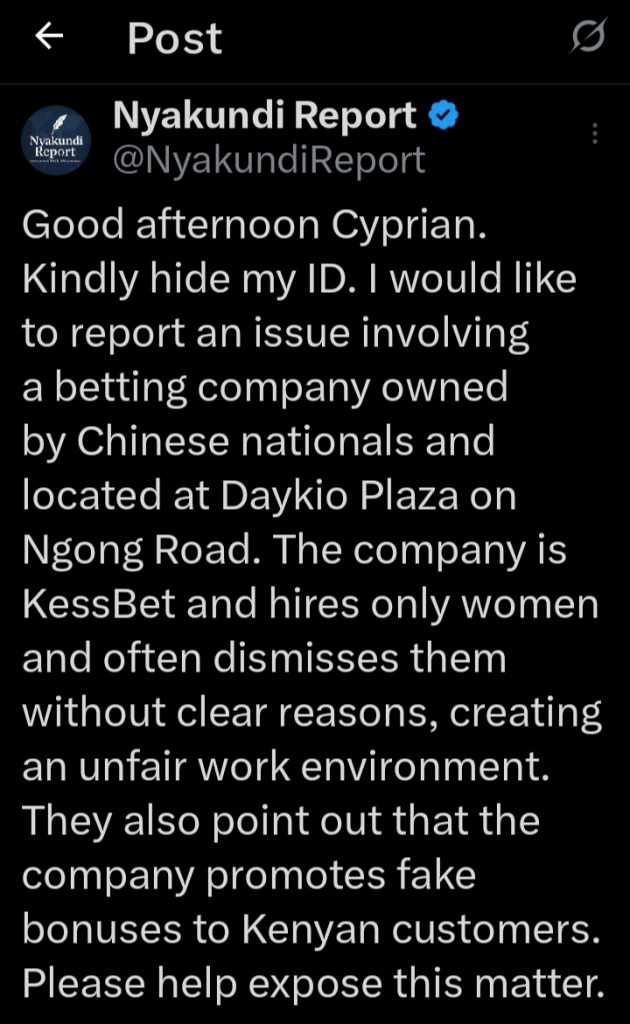
Customers are also reportedly affected. KessBet has been accused of using misleading promotions to attract new players. Offers such as free bets, cashback rewards, and deposit bonuses allegedly fail to materialize once accounts are created.
Some users say the promised funds never reflect in their accounts, while others encounter hidden conditions that prevent withdrawals.
These practices can leave bettors feeling cheated, compounding the natural risks associated with gambling.
Social media reviews echo these concerns. Some customers report difficulties accessing accounts, mishandling of personal information, and unsolicited marketing messages.
Others complain about delayed payouts or inconsistencies with promotional offers.
These experiences closely mirror the issues described by the whistleblower, adding credibility to the claims.
The company’s hiring practices raise additional questions. The focus on employing young women in customer-facing positions, sometimes reportedly based on appearance rather than qualifications, may contribute to a toxic work culture.
Employees may feel undervalued and easily replaceable, while dismissals without proper cause or notice could allow them to pursue claims of unfair termination under Kenyan labour law.
Foreign investment can strengthen Kenya’s betting industry and create jobs, but it must operate within local legal frameworks and respect both workers and customers.
Allegations of misleading bonuses and unlawful dismissals suggest a disregard for the people who support the company’s growth.
Regulatory authorities, including the Betting Control and Licensing Board and labour offices, may need to investigate these claims to protect both employees and bettors.
The whistleblower’s revelations shed light on challenges that may be affecting many Kenyans silently. Transparency, accountability, and adherence to the law are crucial if KessBet is to earn trust and operate responsibly in the market.